Jabra Hybrid Ways of Working: 2021 Global Report
New research by Jabra uncovers key workforce trends in the shift to hybrid as we navigate these new ways of working.
Embracing the hybrid wave
The world of work is going through a marked change, and we’re at a pivotal moment. Though more gradual and planned than the pandemic-induced shift to remote work in 2020, the shift to hybrid work is likely to be the biggest permanent shift in work culture for an entire generation. In our 2021 Hybrid Ways of Working Global Report, we unpack the key trends affecting businesses, as we navigate this seismic change.
Leading from the front
At Jabra, although many of us have been working flexibly for years, we’re now navigating the shift to hybrid working across our wider global workforce, and like many companies, evolving our strategy as we learn. Although last year’s sudden shift to remote work was disruptive, we learned that it was not only possible, but beneficial to work even more flexibly.
Reading the room
To help organizations leverage these unique opportunities for themselves, the 2021 Jabra Hybrid Ways of Working Global Report unpacks the findings from a study of more than 5000 knowledge workers in five key countries around the world.
And because employees are those most impacted by the transition to hybrid ways of working, we’ve highlighted some of their most illuminating perspectives on topics covering the future of the office, inclusion, and equity in hybrid models, as well as how employees view trust, culture, and teamwork in a work-from-anywhere future.
There’s much more to discover
Read the full report to explore these insights and expert perspectives in more depth, and to understand the key points for consideration as you map out your hybrid working future.
Location
While 2020 taught us many lessons, the biggest shift to our working lives was location-based. We shifted our primary work location from the office to home, and realized that with the right tools, we could be productive and maintain business continuity throughout remote working.
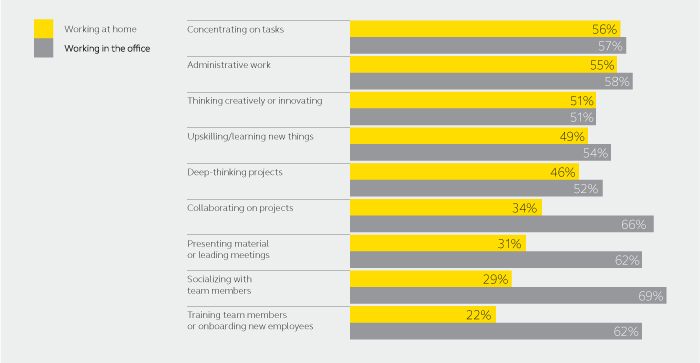
So much so, that most employees now consider the majority of their tasks as possible from home. Our research showed that knowledge workers feel most tasks can be better accomplished from home, with the exception of collaborative work, where engagement, socializing, meetings, and onboarding new employees are considered far more effective in person.
Here are the key location-based trends impacting the future of the office and where employees get their best work done.
The trends
Offices spaces will be seen as an added resource for social and collaborative tasks
Knowledge workers primarily want to use offices for collaborating in meetings, socializing and training team members, or onboarding new employees. For many though, the office will center around informal collaboration opportunities, with 71% of the global workforce seeing the office as a social amenity, while independent work will happen off-site.
Office spaces are a clear preference for social and collaborative tasks

Next Steps
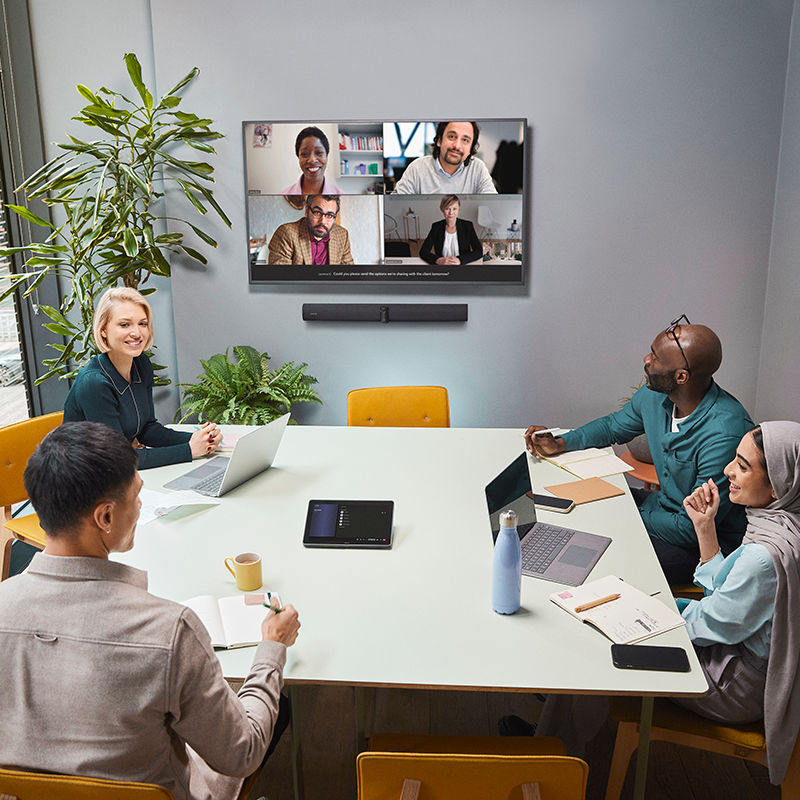
Organizations should consider the value of unstructured interactions and informal collaboration in the office and how much their teams will benefit from information exchange or networking. This requires rethinking how offices are designed and how to guide employees on their use.
Flexible hot-desking arrangements, dedicated collaboration spaces with whiteboards, and library-like zones, are all examples of different zones you should look at creating in your new office layout. By creating this campus feel, you can facilitatethe type of hybrid environment that brings employees together in offices again for the right type of face-toface interaction.
73%
agree that "in the future, having office space will be considered an employee benefit rather than a mandatory way of working”

First impressions count – reasons for return could potentially be misread
For many people, a desire to return to work might not be because of the reasons managers think. The dominant pain points for remote workers are reduced team connectivity and motivation, as well as equipment challenges, but this may be because of poor organizational support helping employees adapt with the remote working transition.

Employees are more likely to request more days working in office – 3 days or more a week – if their company did not do a good job transitioning to remote work during the pandemic, with 17% wanting to be in the office full time, compared to 14% for those who had a good experience with the remote work transition.
Because of this, organizations should not jump to the conclusion that employees want to come back to the office because leadership has created an accommodating space for work and culture; it could just as likely mean that lacking trust and support for flexible remote work created greater challenges.
Work from home challenges differ around the world
52% agree that “in the future, having office space will be considered an employee benefit rather than a mandatory way of working”
- France & Japan Lack of work and home boundaries
- USA, UK, Germany Lack of connection with my team and feeling isolated
Next Steps
In formalizing hybrid-work strategies and agreements, make sure to understand the driving factors and uses for which employees want to return to the office. Our research confirms the findings of many other studies that show that those in senior leadership positions usually display higher confidence levels in returning to the office than employees. In this light, it is key to understand that home working challenges do not directly correspond to return-to-office drivers.
Leadership
The puzzle of hybrid work poses one of the greatest management challenges of modern times. Capitalizing on the benefits of flexible and remote work, while re-utilizing the office as a renewed resource is a complex problem to solve in order to enable an equitable workforce. Hybrid itself is not a remedy; there will be a spectrum of implementation, and it is up to leaders to align and evangelize healthy practices that work for a specific company in order to foster high performing teams of individuals.
While each organization needs to consider its own unique needs to optimize hybrid work productivity, standardizing these practices such that they meet the unique complexity of each employee’s ideal hybrid working preferences is a challenge. Threading the hybrid needle will require new leadership perspectives built on the insight of knowledge-worker preferences and viewpoints.
The trends
Organizations must communicate clear principles, but will suffer from policies
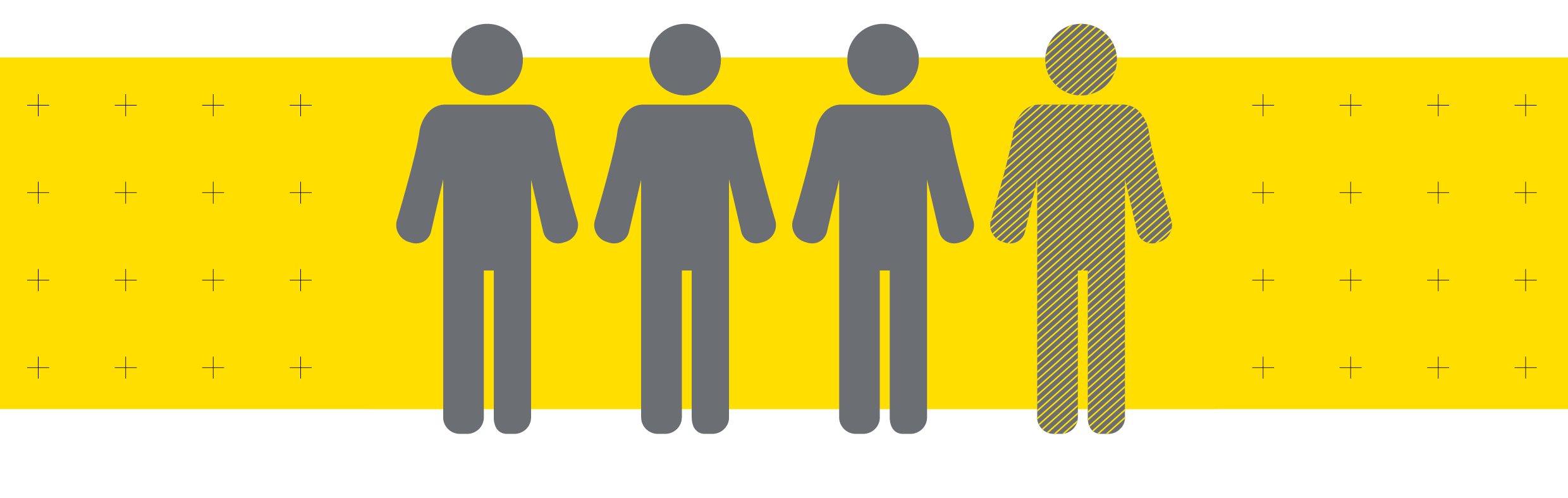
Much of the complexity for management lies in designing return to the office policies that maintain employee autonomy and flexibility while still encouraging ways to bring people together for meaningful activities. Three in four knowledge workers say they have concerns around a hybrid work future (74%), but most of the reasons driving this come down to sound leadership and communication practices.
3 in 4 have concerns around
a hybrid-work future
While knowledge workers are seeking clear guidance on company-wide expectations for hybrid work, they still desire flexibility and autonomy to make individual decisions on how best to get their jobs done. Majorities believe managers can make a hybrid work environment as comfortable as possible by allowing team members to set their own schedule (65%), instead of holding standard 9-to-5 working hours (35%). A similar percentage would prefer that management allows team members to come into the office when they need to and work from home when they need to (61%), over setting “in office” and “at home” days each week for the team (39%).
Top 3 concerns about hybrid working future
The majority also see a path forward for companies to solve these complex issues, most notably with simple steps, such as establishing clear guidelines on when to go into the office and setting clear expectations for communications and reporting. Rather than setting formal policies in place, leadership should focus on creating high-trust environments in which principles and guidelines are communicated, making expectations clear for employees while allowing them to retain autonomy and maximize their flexible working arrangements.
Top 3 requests for leadership in hybrid
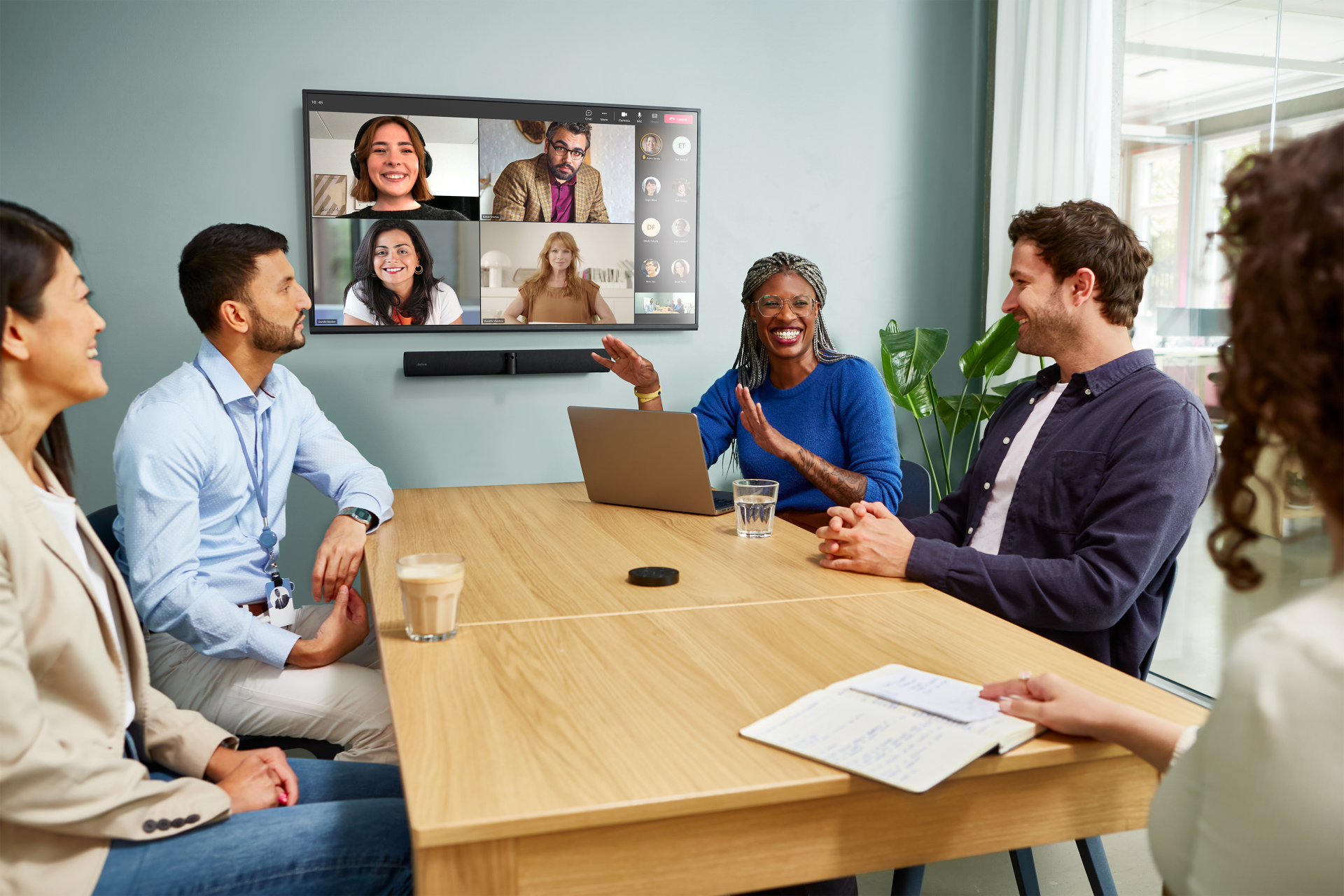
Companies that consult employees will win in the long run
Throughout the pandemic, leading organizations have communicated more consistently with their employees, and equally listened to the input and feedback from managers and teams undergoing the transition to remote work. Now, as the shift to hybrid is implemented, 86% of employees think that careful work guidelines are needed for an equitable hybrid workplace.
Considering the opinions of multiple stakeholder groups can be a complex process, but 85% of all knowledge workers we surveyed would value consultation before implementing any hybrid working practices. Companies that consult with employees are likely to see more success in hybrid. And even if they don’t agree with all of them, consulting with employees will lead to higher satisfaction with new practices and broader buy-in and adoption into hybrid ways of working.
People
The pandemic disruption affected every person uniquely, and made work much more personal for everyone, as the boundaries blurred between our home and working lives. To help people thrive in more flexible working environments, every organization needs to plan processes and guidelines that drive a people-first agenda. This means emphasizing empathy, culture, and the tools and training needed for a work from anywhere future.
These are the key insights from our research that can be used when considering your people practices in hybrid work.
The trends
Flexible working is more important than salary and other benefits
For many knowledge workers, it is not just the ability to work from either home or office, but the ability to work from anywhere, that is a true differentiator. With 75% of knowledge workers wanting to work from wherever they are in the future, organizations need to rethink benefit structures to remain competitive.
Flexibility is so important to the workforce that 59% of knowledge workers assert that it is more important to them than salary and other benefits. With employees able to access a broader range of employment options, the fundamentals of labor supply and demand have shifted in employees’ favor. Hybrid work has catalyzed a power shift from organizations to employees and employees have realized that there is a smarter way to work and a more tailored way to integrate their personal and professional lives with flexibility.
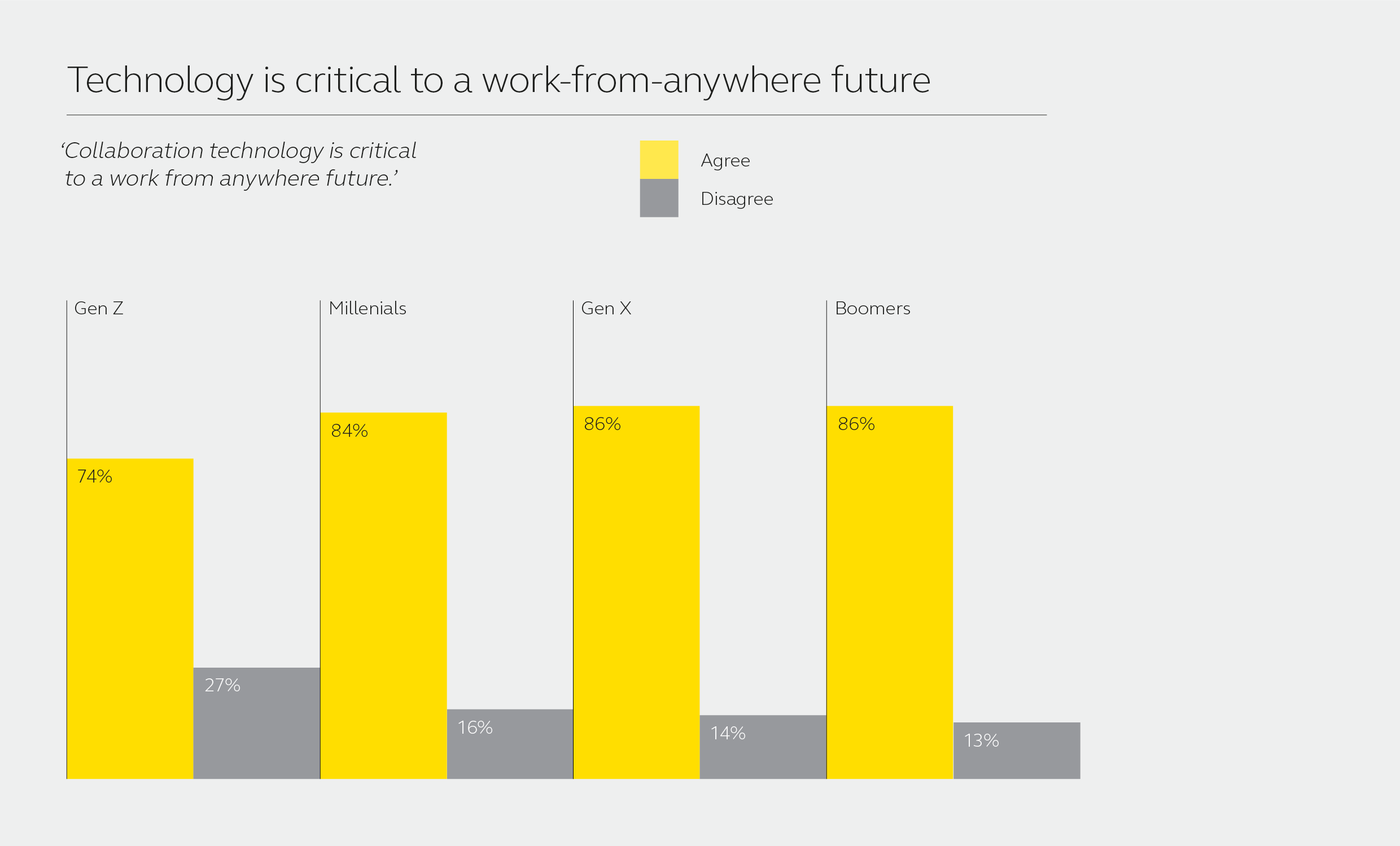
Since the pandemic began, 48% of all employees surveyed globally have considered changing jobs. 81% have said that a hybrid work model will allow more intentional use of time and spaces in order to ultimately be more productive. As employee priorities change, and new ways of working are realized, organizations need to reconsider their workplace practices and benefits in order to remain competitive and attract the best talent.
81%
agree that "organization who embrace a hybrid model will have a competitive edge in the future”
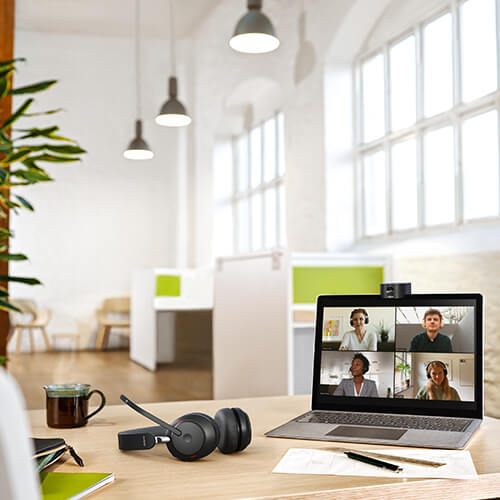
A hybrid working model with the right technology will lead to better employee mental well-being
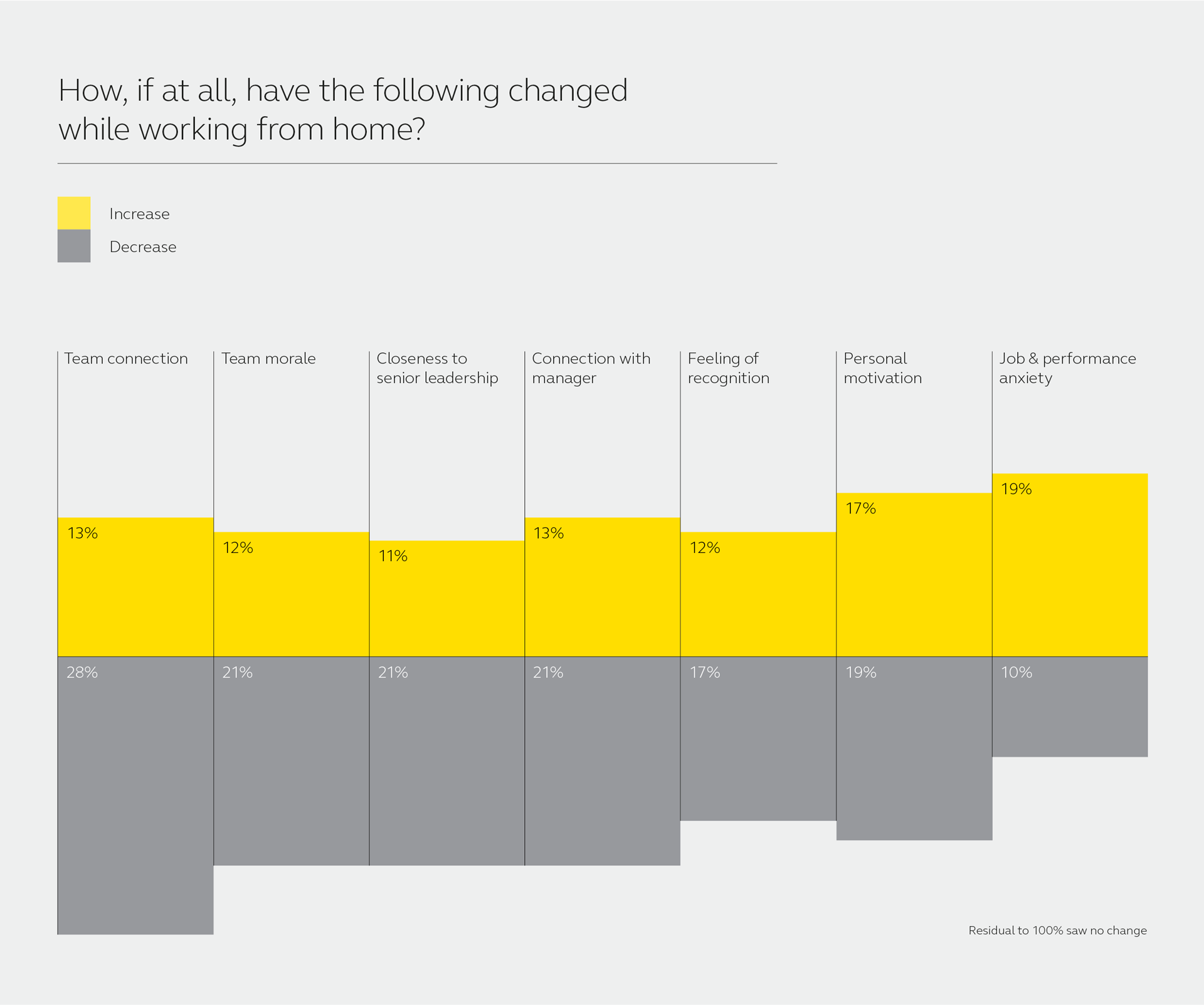
While working remotely, anxiety levels rose, people worked far longer hours, and our research showed that lacking boundaries between our personal and professional lives consistently ranked as one of the biggest challenges around the world while working from home. During remote work, our research showed that sense of connection amongst teams decreased 28%, feelings of recognition decreased 17%, and employees’ feeling of closeness to their direct manager decreased 21%.
Conversely, nine in ten knowledge workers say a hybrid environment would either increase or maintain a sense of trust in their team (90%), the level to which they feel their employer cares about their well-being (89%), and the level of recognition they feel for their contributions (89%).
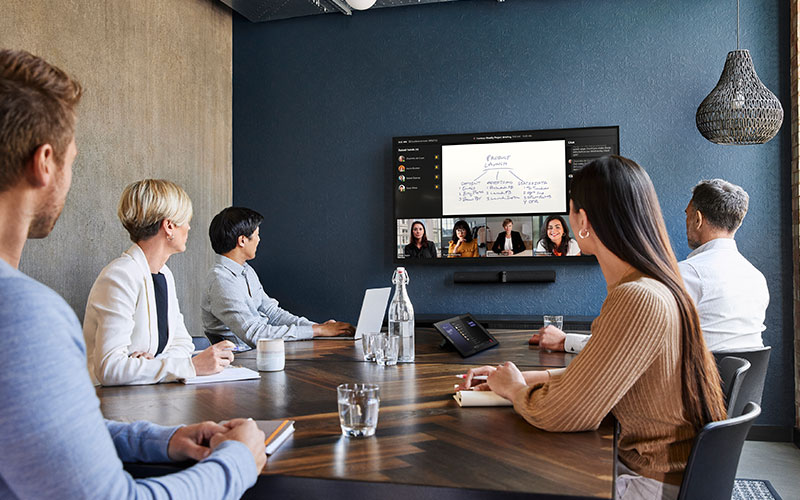
As the preferred model for the majority (68%) of employees, hybrid work can offer employees the flexibility to better balance their time, while technology coupled with clear guidelines can address the major concerns with hybrid work models and lead to higher performing teams with a healthier work-life balance.
Knowledge workers believe hybrid working will increase their work well-being
“A hybrid work environment would increase or maintain”
Next Steps
In formalizing hybrid-work strategies and agreements, make sure to understand the driving factors and uses for which employees want to return to the office. Our research confirms the findings of many other studies that show that those in senior leadership positions usually display higher confidence levels in returning to the office than employees. In this light, it is key to understand that home working challenges do not directly correspond to return-to-office drivers.
Download the full report
Jabra hybrid Ways of working: 2021 Global Report